
Episode 432 – The Seven-Figure Wake-Up Call: What Nobody Tells You About Scaling with Emily Sadri

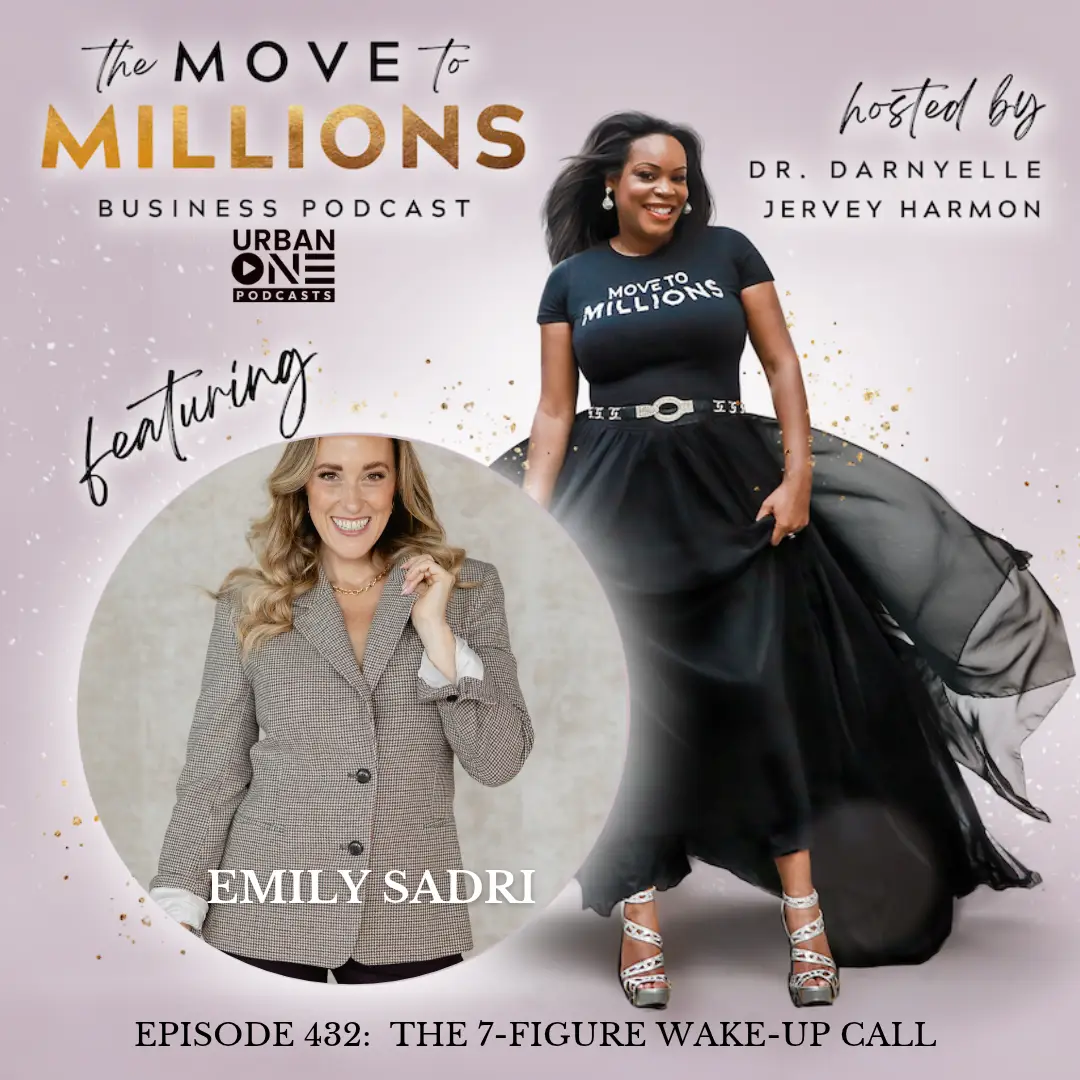
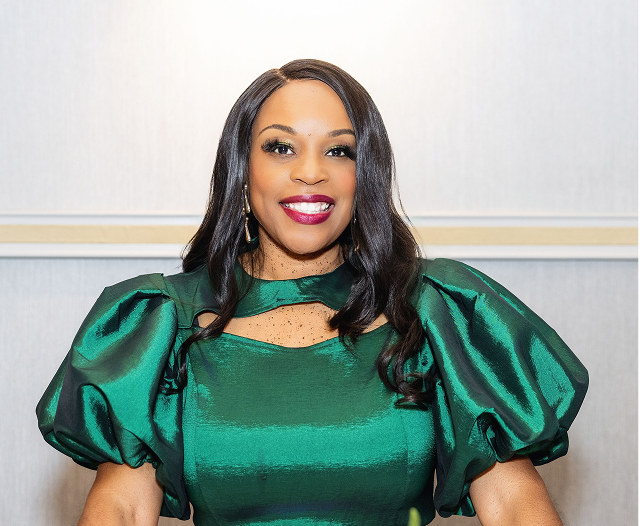
About Our Guest: Emily Sadri is an Ivy League educated women’s health nurse practitioner, certified nurse midwife, mom to four, and the founder of Aurelia Health, an innovative telehealth company serving 12 states and growing. She is an expert in blending midlife hormone optimization with functional and longevity medicine, and she’s reinventing how care is delivered, and how health is measured. She built Aurelia with zero investment, and no business experience to a practice with hundreds of members, and over seven figures in annual recurring revenue, without paid ads. Her mission is simple: give women over 40 the physical resilience to live their best lives.
This episode is powered by The Move to Millions Ascension Archetype Quiz
Nobody tells you that making seven figures can expose how little you actually know about running a seven-figure company. You can be exceptional at what you do, have clients who love you, generate revenue you once thought was impossible, and still find yourself staring at payroll wondering where all the money went. You can hire a team to create freedom and end up more dependent than ever. You can finally reach the number you've been chasing and discover that the business you built for your life is now competing with it. My guest, seven-figure CEO Emily Sadri, didn't start her business dreaming of millions. She started because she was done sacrificing herself to someone else's schedule. And what happened next challenged everything she believed about money, leadership, hiring, and what it actually takes to grow. If you think hitting seven figures automatically means you've figured out business, this conversation is about to introduce you to the lessons the revenue milestone doesn't teach.
What happens when your business hits seven figures but the freedom, financial security, and ease you expected haven't quite caught up? In this revealing conversation with seven-figure entrepreneur and integrative healthcare practitioner Emily Sadri, we're pulling back the curtain on what it actually takes to build and sustain a successful service-based business. Emily shares how she went from wanting a few hundred extra dollars a week to generating $37,000 in her second month of business and eventually building a seven-figure company. But the real revelations come from what happened along the way: the expensive hiring lessons, the pressure to keep everyone happy, the difference between revenue and profit, the importance of client retention, and the realization that nobody else can take responsibility for the business you've been called to lead. We're talking CEO leadership, team accountability, business cash reserves, financial literacy, sustainable scaling, and why the business that makes millions isn't necessarily the business that makes you wealthy or free.
Here is the truth: seven figures won't automatically make you a seven-figure leader. You can generate a million dollars and still lack the financial literacy, operational visibility, and leadership discipline required to sustain it.
Get your Move to Millions Podcast notebook ready—you’ll want to take notes on the lessons packed into this incredible conversation! Listen in to discover:
✔ How to build a team accountable for results, not just tasks
✔ How to turn seven-figure revenue into profit and financial reserves
✔ How to scale without sacrificing the freedom you started for
✔ And so much more
This episode is a call to stop assuming revenue growth means your company is getting healthier. If your payroll is expanding, your profits are shrinking, and your freedom is disappearing, the number you're celebrating may be hiding a problem you can no longer afford to ignore.
This is your invitation to examine the company you've actually built, not just the revenue it generates. Are your people, processes, and financial decisions creating freedom, or have you simply built yourself a more expensive job?
Move to Millions Wisdom Questions:
Book | The Alchemist by Paulo Coelho |
Quote/scripture | "No one can do this for you but you." Emily Sadri |
Tool | Voxer for long, asynchronous voice conversations with trusted girlfriends |
How to Connect with Emily Sadri:
- Website: emilysadri.com
- Instagram: instagram.com/emilysadri_np
Incredible One Enterprises, LLC is not responsible for the content and information delivered during the podcast interview by any guest. As always, we suggest that you conduct your own due diligence regarding any proclamations by podcast guests. Incredible One Enterprises, LLC is providing the podcast for informational purposes only.
- "Everyone is replaceable but me." Emily Sadri
- "Your destiny is not tied to those who choose to walk away." Darnyelle Jervey Harmon
- "Sometimes the best affirmation is just taking action." Emily Sadri
- "My 50s are for freedom." Darnyelle Jervey Harmon
- "When you're a high achiever, you sometimes can't discern desire from obligation." Emily Sadri
- If my business crossed seven figures tomorrow, would I actually know how to lead and sustain the company it would become?
- Where am I expecting a team member, mentor, or new hire to rescue me from a responsibility that ultimately belongs to me?
- Can I clearly explain how every person on my payroll contributes to revenue, profitability, client retention, or another measurable business outcome?
- Am I building real wealth through profit, reserves, and financial stewardship, or am I confusing the money coming in with money I actually get to keep?
- If I redesigned my business around the life I genuinely want to live, what would I stop doing, stop funding, or stop tolerating immediately?
- Take the Move to Millions Ascension Archetype Quiz
- Join the Waitlist for Sanctuary
- Move to Millions: The Proven Framework To Become a Million Dollar CEO With Grace & Ease Instead of Hustle & Grind by Dr. Darnyelle Jervey Harmon – Get Your Copy
- Join the Move to Millions Facebook Group for ongoing support and community engagement – Join Now
- Move to Millions 90-Day Business Growth Planner – Get Your Planner
Personal brand website: https://drdarnyelle.com/
Company website: https://incredibleoneenterprises.com/
Move to Millions website: https://movetomillions.com/


Emily Sadri: [00:00:00] The last thing that I've really learned in the last year is how does every single person that I'm paying money to contribute and own outcomes? Every person should know how they're driving revenue and profit
Darnyelle: Welcome to the Move to Millions podcast. Each week we explore the intersection of business growth, neuroscience, money and wealth consciousness, leadership, and spiritual alignment so that you can build a business that funds your legacy without fragmenting your life. I'm Dr. Darnyelle, best-selling author and creator of the Move to Millions method.
And if there's one thing I'm clear about, it's that the move to millions is not just about business growth. It is an evolution of who you are and how you lead. And trust me when I tell you that until you are safe and secure in your relationships with yourself, money, wealth, and success, your move to millions is indeed in jeopardy.
My job is to equip you to become your very own sanctuary for soul and strategy [00:01:00] success. This is the Move to Millions podcast. Welcome home
Hey, y'all. I'm so excited to welcome you to another episode of the Move to Millions podcast. Listen, have I got a guest for you today. Listen, you already know if I'm bringing you a guest, they are the best of the best, 'cause I don't play that on this show. I am so excited. This conversation was even better than I imagined it would be as I was reading through all of her details.
Y'all, I want you to make sure that you get pen and paper. You might want some tissues, and you absolutely wanna have some water so you can stay hydrated, 'cause the nuggets are about to nugget. All right, let me share a little bit about Emily Sadri. She is an Ivy League-educated women's health nurse practitioner, a certified nurse midwife, a mom to four, and the founder of Aurelia Health, an innovative telehealth company serving 12 states and [00:02:00] growing.
She is an expert in blending midlife hormone optimization with functional and longevity medicine, and she's reinventing how care is delivered and how health is measured. See, she built Aurelia with zero investment and no business experience to a practice with hundreds of members and over seven figures in annual recurring revenue without paid ads.
Her mission is simple: give women over 40 the physical resilience to live their best lives. Y'all, we did not talk about healthcare during this conversation. We got all up in and through the ins and outs of making the move to millions. So again, grab your Move to Millions podcast notebook, grab your favorite beverage and an ink pen, and let's jump into my conversation with Emily Sadri.
Emily, oh, I am so excited to welcome you to the Move to Millions podcast. How are you today?
Emily Sadri: I am [00:03:00] great. I'm really excited to connect with you today.
Darnyelle: Yeah, I've been looking forward to this conversation because your story, I think it's unique, but it's also not so unique. I think a lot of people find themselves in the same place that you found yourself.
Before we jump into all of that, you know, I will have read your professional bio, but if there's anything else that you want our audience to know that'll anchor in our conversation today, here's your opportunity to share that.
Emily Sadri: Well, I guess if you had told me five years ago, 'cause we just had our five-year anniversary in my company, that I would be having a conversation about what happens when you become a seven-figure company, I would not have believed me.
And I probably would say I don't wanna do that based on so many of the experiences that I'm living in. But that part about being an entrepreneur is that the former version of you could never have imagined the stretch points and the, the, the pain points and the growth edges that you would come into contact with, that you would meet up with.
[00:04:00] And yet, somehow, when we get there, I think really good entrepreneurs lean in to that hard and we push through it. And, you know, that, that has been a message that I have seen across the industry that keeps me going, is understanding that this is a shared experience, that almost everyone goes through this in some way, shape, or form.
And so here we are.
Darnyelle: Okay That was so good, and I had to write it down because that's where I want us to start. I had another direction for us to go in, but you done already switched it up, Emily, and I am completely here for all of it. You said our former versions of us could never have imagined what you actually experienced.
And I know for the work that I do, so many people don't wanna do seven figures for probably the same exact reasons we're gonna talk about right now, and that you didn't wanna do seven figures, and you wouldn't have believed it had you been on the other side of this. So let's start telling the story.
Like, I know you came into this really just to make a few [00:05:00] extra hundred dollars a week, y'all. Like, a few extra hundred dollars a week, and here we are seven figures later. So talk to us kinda about that, the journey, the trajectory. Let's start with how you got started. I know it wasn't your desire to become an entrepreneur, but here we are, and then we'll go from there.
Emily Sadri: Yeah. Well, I think it's really important to say because maybe there's a person listening or, you know, maybe a former version of yourself can relate to this. But when I started my practice, it wasn't because I had a dream of, of being a business owner, it was because I wanted, you know, a more minimal schedule as I was a new mom of four.
It was the middle of COVID. I had four little kids under eight years old, including a baby. And I had already done the, like, going back to crazy clinical work and being on call with one baby and two other children at home, and it almost broke me. And I was a great employee, right? Like, patients loved me. My schedule was full.
And, you know, to me as a business owner now, I'm like, "I was just straight profit for you."
Darnyelle: I was
Emily Sadri: like, [00:06:00] "You gave me a, a day to fill with patients. It was gonna be full, and you were gonna have revenue for the practice." So it didn't make sense to me why they turned me down and said like, "No, unless you do the full thing, like, you can't be here."
And I just wasn't available for that, and something in me was like, "No more." But it was more the "no more" than the "yes, please" that got me to where I am today, right, initially. And so when I started, my goals were just have some revenue so that I can further my education, continue learning, and be in the work because I truly love what I do and I love the work and I love working with women.
I love integrated medicine. And I just wanted a container that would help me grow. I didn't have big aspirations. And then in my first month of business, I still remember, like, the first transaction that came through, the feeling of, like, money being created out of nothing. And obviously it wasn't out of nothing, but it felt that way when all I had ever experienced in my life was...
I mean, I had done some, like, contract work, but a lot, it was a [00:07:00] lot of W-2 time and a lot of, like, things where I had to do something that someone was specifically asking me for, not something that I created from nothing. So to have someone say, like, "I willingly give you $500, you know, for this," that was my first offer, was $500 for an initial visit that I would do in your home, and then a follow-up visit that we would do online about a month later to review labs.
And I couldn't believe how many people were like, "Please, I need this." And I decided in the second month that instead of just having, you know, one-off repeat visits, because I could already feel, like, the overwhelm and the burnout, like, just starting to creep in just a little bit, and I had such a high sensitivity to that because where I had come from in medicine, that was the reality that I lived in all the time.
And again, because my whole motivation was no more when I started, I had a very distinct filter that as soon as that started to creep in, I knew I had to change the model. Like, anything I could do to protect myself from that, because I knew that that would also bastardize the care that I was able to give.
Darnyelle: Very early
Emily Sadri: on [00:08:00] I said, "I wanna focus, like, I wanna go deep and I wanna stay small. And so what if I, you know, created an offer where it was this much money to be working with me one-to-one for the whole year? And you would, you know, really have access to me, get attention from me, you know, medically and personally.
You know, what would that be like?" And so I literally started a Flodesk account, and I emailed everyone who, like, I had had an individual email exchange with in my inbox in, like, the last year. So, you know, moms from my kids' classes, like, friends. I mean, it was, it was a very tight group. I had no email marketing.
I didn't create an opt-in. I didn't have a website. I had nothing, right? I had my medical platform and I had Flodesk.
Darnyelle: But hold on for a second, Emily, because you don't need any of those things in order to make money. I mean, the industry will tell you you've gotta have all of these pieces in a puzzle, but the truth of the matter is, all you need is someone to call who has a problem and a way to take money, and you can start a business and you can make money in your business, as evidenced by your own story.
Emily Sadri: [00:09:00] 100%. And I think the willingness, the other ingredient, is, like, the true genuine, honest willingness to help someone, right? 'Cause people, especially now, it's different in 2021, but especially now, people can sniff out ill intention. Like, I really did wanna be of service, and I sold five spots to that year-long engagement right away.
And so in my second month of business, I did $37,000 in revenue And that changed everything for me because to make that amount of money when I had never had money deposited over volumes of a few thousand dollars, right, from a paycheck was just so mind-blowing to my whole framework. Like, my whole brain didn't understand because, you know, when you, when you are on a career path, and I was, you know, a nurse practitioner, a midwife, I have a fancy Ivy League degree, but still the cap for my salary potential, you know, my earning potential was, I don't know, $130,000, $140,000 a [00:10:00] year.
So to be able to generate that from-- and also doing something entirely unique that was very me, like, changed my self-concept. It changed the way that I showed up in my marriage. It, it changed everything, and that was what I got hooked to, was how much the business and the act of taking a risk and going all in on yourself can change your self-concept in a way that you didn't even anticipate.
And I think that's still what I'm addicted to today, is the knowledge that if I keep pushing through the hard and I stay true to the same things that I was true to in the very beginning, which are being of service to others, creating a legacy. You know, I'm really passionate about having a model of care that's entirely different from anything else that exists, changing people's lives.
That if I stay on that path and I stay committed to making that a reality, that I will not be the same person on the other side of it.
Darnyelle: If you've been doing all the right things but still feel like you're carrying more weight than you should, it's not your strategy, [00:11:00] it's your pattern. There's a hidden way that you lead that's shaping your money, your success, and your peace, and until you see it, you'll keep working harder than you have to.
The Ascension Archetypes Quiz shows you in just three minutes what's been driving your business behind the scenes and what needs to shift so that you can finally experience the overflow you're desiring. It's fast, it's free, and it will give you the language for why things feel harder than they should right now.
Go now to movetomillionsquiz.com to find out which archetype is running your business today
Emily Sadri: My best-selling book, Move to
Darnyelle: Millions: The Proven Framework to Become a Million-Dollar CEO with Grace and Ease Instead of Hustle and Grind, is now available on Audible. That's right, you can listen to nugget after nugget, strategy after strategy, and chapter after chapter designed to help you to position your business for seven
Emily Sadri: figures [00:12:00] with grace and ease instead of hustle and grind.
Go to Audible today to get your Audible copy of Move to Millions.
Darnyelle: Again, so many tangents that I wanna go down, but I really love this idea of going all in on yourself and self-concept, so much so that you change everything. Because I feel like, you know, when I think about, there are not many places where my story parallels yours, but I think similarly to your $37,000 cash month, I remember feeling the same way, money being created out of nothing.
Which was very different than being a W-2. In my case, I was a vice president in a Fortune 500, but I know I efforted for every dime I ever made. I put in an hour. I did FaceTime. I did all the things one does when they're an employee, and maybe it's a little bit different in healthcare, but still, that's what I did, right?
But I'll never forget that first $10,000 offer and someone [00:13:00] wiring me $10,000 without doing anything other than clarifying the outcome of our work together, and $10,000 was in the bank account. I hadn't even done anything yet. And what that did, I don't know if I would've been able to even conceptualize it until I just heard you say what...
But what that did to my self-concept, what it began to do for my identity, what has shaped the identity that I have today, which is why seven figures and then eight figures even became possible, because I started to see that a new reality was available, right? Um, I think it's Rumi who says, "The path emerges as you walk it."
And had I not experienced $10,000 through just having a conversation, I would not have known that that were even possible. But because I did, as Oliver Wendell Holmes says, "Once the mind has been expanded, it can't return to the same place." I just couldn't stay [00:14:00] there anymore. So I imagine that that's the same thing that you experienced, yes?
Emily Sadri: Yeah, 100%, and I think there's something about a difference between working your butt off for 80 hours in a two-week period and then getting paid a week later And someone paying you upfront saying, "I have faith that you're gonna deliver on this," instead of, "Oh, well, were you here or did you clock in sick hours or PTO or whatever, and I'm only paying you, like, what I promised to pay you befo-" Right?
There's, like, a different value exchange that changes your belief in yourself and, and also makes you rise to the occasion because now you've got this person that's vouched for you and is depending on you to deliver. And so by staying true to that and delivering on that, you also begin to evolve.
Darnyelle: Yeah. I think that there are some people who don't rise to the occasion, though, that it becomes sabotage for them, and they're like, "Money, easy money feels yucky.
This is not what I'm used to. This is not my life [00:15:00] experience, therefore I need to figure out why this is happening, or I'm not gonna do anything at all." And they end up sabotaging.
Emily Sadri: I think so, and I think that, you know, we're seeing that shake out in the coaching industry right now. You know, the people who were making a lot of fast money in 2021, '22 are completely build- rebuilding their businesses from the ground up.
You know, money is not fast anymore like it was.
Darnyelle: Well, money is still fast. They're not experiencing it fast.
Emily Sadri: Yeah, and I think, you know, people, people are talking about a trust recession. They have been for a couple of years now. We've all been coming home to ourselves a little bit more, and instead of just putting our trust in other people immediately, right, we're...
or I think people are being more discerning than ever before. We're seeing that in our industry, and I'm here for it. Like, I love that challenge. I love the challenge of, like, really clarifying for people what we do for them and then also making good on our promise and continuing to deliver all along the, the trajectory.
And growth for us in my [00:16:00] company is just as much, if not more, about retaining people than as it is about getting new people, and I think that that keeps us so grounded in our integrity. We're not doing big launches two times a year where we're just trying to grab 200 people and then move on, right? We are enrolling patients that will hopefully stay with us for a lifetime because perimenopause and menopause are, you know, progressive conditions that you ha- you know, you are always living in a post-menopausal state at after a certain point, and you need that dynamic, adaptive care.
And so it keeps us very connected to the real people who we are serving and not the bright, shiny objects of, like, what's the next thing that I can do to grab a bunch more people?
Darnyelle: I think what you just said is so important. I've been teaching building clients for life for as long as I've been a business growth strategist, and we're at 18 years at this point.
And I think that not just because of the old cliche, it is, you know, it's cheaper to keep her- But when you actually go into partnership with your clients and you look to work with them for a trajectory [00:17:00] instead of just that one quick hit, it changes everything. I mean, I've got a slew of clients who have been working with me for more than a decade, literally.
And then I've got another slew of clients who come in and out every few, every two to three years. Now, of course, I'm not healthcare, so of course, I would expect that would be even more consistent than it is in my work. But I've got a lot of clients that just keep recircling because of what you said earlier, the commitment to integrity, the commitment to doing work that makes a difference and builds real lasting transformation, and treating people as important individuals and not Stripe notifications.
We don't even use Stripe, but you get the point I'm trying to make, right, which I think just makes such a difference that that has been the effect. And what's interesting to me is that although you didn't purpose to hit seven figures, by having the values and the integrity that you have, you've actually built a business to seven figures, which I would venture to guess [00:18:00] would be sustainable.
Now, I know that there are some bumps and bruises that we're gonna talk about as a part of our time together today.
Emily Sadri: Concussions? Do you mean concussions?
Darnyelle: Concussions, yes. We can talk concussions, 'cause yes, absolutely, sometimes they are indeed concussions, right? And what I love about, before we even get to that, because I think it's an important part of the story, is that you had the right come from from the very beginning.
And because where you were starting from and what your end game was was so strong, was so sound, and was so integrous Even the concussions along the way didn't completely derail your ability to build this business that is creating legacy for your family, even though that's not even what you got into it for, and you've gotta be excited about that.
Emily Sadri: 100%. I also am really excited about the fact that it's come to a point where, like, when things fly at me now that would take me out for six months in year one, that are so hard, you know, th- there's so much emotion when you're [00:19:00] growing a business, team changeover, heartbreak, losing clients, like, all the things that can happen.
Now, it's almost like I just laugh when these things happen. Like, the upset is so momentary and I'm like, "Okay, what do you got next for me?" Like, I just see it as this spiritual journey of understanding that everything is indeed happening for me, no matter how much it knocks me down, and that's just, what a beautiful lesson, and I'm so grateful that I get to do this.
What I'm gonna end up being at the end of my life, you know. I know that we don't lay on our deathbed and think, like, "I could've done this other thing and work," but we do become a different person. Different in the whos that we have in our life, different in who we create our community to be, different in how we interact with our family, different in how we're able to give to our family on this journey, and that's something that I think I will die being very happy about the choices I made.
Darnyelle: Yeah, I love the quote Erma Bombeck has. I don't know if you've ever heard it, but she says, "When I stand before God at the end of my life, I hope not to have a single bit of talent left, saying, 'I used everything you gave me.'" And I feel like that's what I'm hearing [00:20:00] you say in different words, and I think that's the game changer, right?
And I love also that you said business is spiritual. I'm a God girl, and so it is very important to me to understand how all of these things work together. And similarly, everything is working for my good. Even, like in my own story, bankruptcy, right? Even that was a blessing to my journey, and it made me the wealth advocate and catalyst that I am today.
Had I not experienced that, I wouldn't be sitting here today as the woman that I am, so focused on helping people understand what wealth is and how to build wealth through their business. So I think everything, if we choose, right? It's all in our come from, it's all in how we see it, which I think even in those concussion moments, which we're gonna move to in a second, like that was the underlying silver lining for you because you knew what you were doing this for.
Four babies at home, right? A commitment to really add value and offer a level of care that was not [00:21:00] predominant and relevant in, in your area of the country, right? Like, all of those things are what make the difference, and those are the things that keep us going when the concussions come and knock us upside the head.
Emily Sadri: Hey, I hate to interrupt the goodness that's happening right now in this episode, but I need you to do me a quick favor.
Darnyelle: If this episode is blessing your life and business right now, will you take a few moments and rate and review the show? Your words help more millions-minded entrepreneurs find us and step into their next level.
All right. Thank you so much. Let's get back into the conversation, 'cause we're just getting started. So let's talk about some of these concussions. What are some of the things that you learned on the journey that you didn't know going into it that would've made a difference if you were starting over today from scratch and actually purposing to build to seven figures?
Emily Sadri: Yeah. I think I was not aware of how much, even though I've always been someone that was fiercely independent, and, [00:22:00] you know, I was the eldest daughter, and I have all the things, Virgo, Type A, high performer. I didn't realize how much I was still, and it's still something I struggle with today in that I always have to filter myself before I make any decision, how much I was still looking for someone to do it for me, how much I really want people to save me, and how much I still have a little bit of a mindset of like, "This hire is gonna change everything.
This person's gonna fix this for me. This is gonna be the thing that gets me to the next level." And it's funny because my husband saw it so much sooner than me, and of course, like you never wanna hear these things from your husband. You're like, you're like, "Shut up. Save it," you know? And then you sort of come around and, and he just has to sit there and be like, "You know I love you and I support you.
No 'I told you so's' here." But that has been such a, a challenge for me because you could chalk it up to just basic confidence, and me needing to learn along the way that everyone is replaceable but me, that I don't need anyone to do this but me and [00:23:00] my higher power, and that, you know, also that losing people and moving on in, in the team is not like a value thing.
It's not like a nothing has gone wrong and nothing's wrong with you. Every good entrepreneur goes through this, and, like, gets new mentors and gets new team members and gets new all the things, just because the people who were meant for one phase are not necessarily meant for the next. That was the hardest one for me, and continues to be the place that I have to coach myself the most on, is that as someone who's got, you know, maybe a little bit anxious in my attachment style and doesn't like endings.
I don't like change. I don't like endings. I, once I love someone, I wanna be loyal to them forever, and that just wasn't gonna serve the growth in the business. And many times I have kept people for longer than it was their natural time to be with me.
Darnyelle: Girl. That's a whole nother podcast episode right there, okay?
A whole nother.
Emily Sadri: You know, 'cause you wanna be a great leader. Everybody dreams of having this amazing team and, you know, I think it's [00:24:00] so funny when, when entrepreneurs will say like, "I'm so blessed I have the best team," and I'm always thinking like, you worked your ass off for that. Like, yes, there's some divine intervention, but like, that is not an accidental You know, happenstance thing.
Like, you worked your butt off for that because even up to the very top of funnel when you're bringing someone new on, like just the, the changes in language, the changes in intention, the way that you're looking for someone, like that is an art form that I have refined and actually have completely done away with using any type of outsourcing for my hiring because it's such an important personal journey for me to go through that every time.
Darnyelle: Yeah, I've learned that lesson myself, too, the hard way, and I'm right now, even as we record this, I'm on a gap year, and part of that is I'm recalibrating my whole business. I went from 10 full-time employees to now I think I have four part-time employees, and one person at the time of this recording, her last day is tomorrow.
And I've recognized so many things, like number one, your [00:25:00] destiny is not tied to those who choose to walk away. Number two, reason, season, lifetime. Very few team members are lifetime team members, like you just said a moment ago. Most of them are just to get you over a hump, but they're not to take the full journey with you.
And I love what you just said, that everyone is replaceable but you. I have never heard that, but it resonated so deeply. When you said it, I like felt it in my sha-na-na. Like, I'm like, yes, that... I mean, that is essentially what it is, and if we can work with that understanding It would save so much of the agita we feel when we're having to go through hiring and firing and resignings and all the things that come along with the journey.
It's such a powerful nugget and lesson that you've learned in just five years. I mean, I've been in business 18 years, and I think some of that I just learned in these last five. So for you to have it already, I think is really, really powerful.
Emily Sadri: Working on it. Working on it all the time. And, you know, that's the [00:26:00] thing is that we all have that feeling when we have team members that are great, like, "I would die if that person left."
Have that feeling. And like, yes, it's true that there's gonna be friction points. Like, we're trying to do our first webinar launch without some key team members that used to handle those things, and so it's a little bit of like an all-hands, like, scramble. Like, how do we learn this? Where's this SOP? Like, how the heck do I add a pixel, you know?
And it's like, it's messy and it's annoying, 'cause I've never had to worry about that stuff before, but it's also okay. And there's little mini gifts in me seeing back-end pieces of my business that I never saw before because I just let somebody else handle it, right? And it's like that balance of finding the people that you trust to handle the things, but not getting so disengaged that you don't actually know what's happening at the bottom level.
Darnyelle: We need to know how to do all the things, because the only one who's irreplaceable is us. So if tomorrow we all go into our offices, proverbial [00:27:00] or otherwise, and everyone on the team hands in their letter of resignation, uh, well, rah. If we're gonna keep this thing going, we need to know how to do everything, right?
And I used to pride myself on being a person. I used to be like, "You know what? I only know how to send an email and take the money." And I realized that that actually That's not a flex. That is a big ass bottleneck if something goes awry in the infrastructure of my business. And so I actually started going through SOPs and reading them.
Like, does this even make sense? To go back to team members and be like, "Hey, I know you wrote this SOP, but I don't even understand what it says. So if I don't understand it and this is my company, how in the world is someone brand new off the street gonna understand it? We need to break this thing down.
We need to say it like a fifth grader would understand it," or whatever the case might be. And it was painful to do that, but it was also so important to do that so that I wouldn't find myself with everyone no longer being here and not being able to do what I need to do to keep everything moving.
Emily Sadri: There's so many ways that probably all [00:28:00] people, but I think me especially as a woman, so many ways that I was sort of socially and culturally raised to be a little bit disengaged or victimy around things and be like, "Oh, well, I can't do that thing. You know? Like, I'm not good at tech, and so that person does that."
But then how do you know if you don't at least kind of understand what's happening? Right. If that, this, they're spending eight hours to do a one-hour task. Because if you have no understanding of the task that's being done, then you're just setting yourself up for leaks, right? And any leak is ultimately going to come back to bite you.
It can happen silently for a long time, and you not notice it because you're so over-functioning in other areas, and other team members are over-functioning. But eventually, every leak where we're using too much energy and not getting enough ROI on tasks will always come back to rear their ugly heads.
And that has been my biggest lesson as we crossed seven figures was it's not okay to just know how to send an email and an invoice. It's not okay for me to just know how [00:29:00] to take care of patients, which I do well, and, like, post on Instagram. Like, I actually do need to have an understanding of what each person is doing because otherwise you get...
You can so quickly when you get to this point be like, "How did I get so inflated? Where is all this money going that I'm spending? And, and what is the actual return on it?" And I would say the last thing that I've really learned in the last year is how does every single person that I'm paying money to contribute and own outcomes?
Darnyelle: Honey, can you say that one more time for the people in the back? One more time.
Emily Sadri: How does every single person that I'm paying and permitting to be in my company Own outcomes, meaning, like, every person should know how they're driving revenue and profit. Because no business, until you're, like, a huge company where you're gonna have punch-in, punch-outers, which is, like, not really happening until you're, like, a well bigger company, right?
Which you could also argue that those people are all gonna be replaced by AI anyways. But how do we really make sure that each person from [00:30:00] day one, because how something starts is how something goes. Someone once said to me, and I never forgot that, speaking of your you love the quotes. If you don't begin a relationship with someone on your team, making it very clear how they're accountable to outcomes, like, your role might be client support, however, your outcome and the thing that you are gonna measure your success against is our retention, right?
Like, that is incredibly important, 'cause if you try to come along six months into that position and say, "Oh, hey, by the way, I want you to be accountable for this," you're not gonna get a great response.
Darnyelle: Yeah. Yeah, you- you've lost, right? I tell my clients all the time, three to 10x their salary, and in the first 90 days, that onboarding plan needs to make it very clear on day 91 you start keeping track.
So they've got 90 days to get up to speed and, and, you know, shorter maybe depending upon the role. But by day 91, absolutely unequivocally, three to 10 times. If you can't figure out how you can afford to pay their salary at least three times over, they gots to go, or there's something [00:31:00] wrong with your leadership and development, and you're actually not curating an environment for them that contribute to the bottom line.
And I think the biggest mistake, I know I made this mistake early on, Emily, was treating my team like we were... Would you call them punch in and outers? Yeah. I made that mistake. Like, letting these people think that a paycheck was coming every two weeks no matter whether they did anything or not. Learned that early on, and had to pretty much get rid of that entire team in order to install a team that understood the importance of ROI.
So yeah, I can speak to that from experience.
Emily Sadri: We feel like it feels needy to have expectations. I think that sometimes, like, you know, we're so, we're so taught to be independent and like to show how much we can do that we have a hard time saying like, "I really need you to do this and perform in this way," without...
Like, I, I have an innate feeling like I just need to take care of everybody around me. You know, there's a difference between clarifying a role and streamlining it and taking like below, you know, [00:32:00] value tasks, lower value tasks off people's plate so they can do their role, but it is another thing to try to make them so comfortable that it's like they're on vacation at work.
And that's an extreme example, but I just think that a lot of women fall somewhere on this spectrum of like, are they taking care of you or are you taking care of them, you know? And it, it really should be 50/50. Like, every energetic exchange should be a healthy exchange, otherwise eventually that's gonna come out and feel like an imbalance, and you're not gonna understand why you're so bothered by this person on your team.
Darnyelle: Yeah. Agreed 100%. Like, a lesson I learned the hard way, I mean, I'm looking at payroll, again, years ago, and even recently as I was making a decision to take this gap year and I wanted to just recalibrate my company, I just literally woke up one day, I turned 50 in November, and I was like, "You know, I've lived probably longer than I'm going to continue to live, and I don't know that I'm ever going to retire, but I'm probably gonna start winding down what I'm doing over the next 15 years.
And what I do not want [00:33:00] is this payroll, this level of responsibility. Like, my 50s are for freedom." And so I was like, "Okay, Darnyelle, that means you have to make some really tough decisions. If, if we're going to make this happen, and this is my year to kind of recalibrate everything, if we're gonna make this happen, we're gonna have to make some really tough decisions, and we're gonna have to evaluate everything, and we're gonna have to be willing to scrap everything in the name of freedom, in the name of clarity, of vision, in the name of values for this stage of life."
Right? And I haven't even gotten... I mean, I guess maybe I'm technically perimenopausal, but I'm not having any of the symptoms yet. I don't know if I should knock on wood or be un- I don't know what I should do, so I'm not gonna do anything. But at the same time, I'm like, "You know, I already worked 37 years," because I started working when I was 13.
And when you work 37 years, you retire So I've gotta make this next phase a downswing and not an upswing, right? [00:34:00] And so what does that really look like, and what does that really mean to me, and what is really important to me in this season? Like, I want to ease into my day. I'm living the no alarm life, and I love it.
My priority is my health and wellness. I, you know, I, I probably say this every episode, and I'll be talking about it until it's, it's not a thing anymore, but I've lost 60 pounds and I've kept it off a year at this point. And my health and wellness is priority number one. My stress level's priority number one, and I'm not willing to compromise myself on the journey to having another launch that produces whatever a launch might produce.
I'm just not interested. I, I told one of my mentors as well as my therapist, like, this season for me is called nothing to prove. As a result, it's created so much freedom, it's created so much clarity, and so much zeal and zest for many of the things I haven't done. Like, I'm, I'm... I don't know that I ever had a bucket list, but I have things that I've wanted to do [00:35:00] that I hadn't done and I had been putting off, that many of those things I'm doing this year while, you know, I'm, I'm on a gap year.
So I'm like, let me go to Greece. Let me go to, you know, all these different places that I've always wanted to see that I could make so many excuses as to why I couldn't do them in that previous season of my life. And I think it all comes down to a lot of what we're talking about, um, in this conversation.
Like, just recognizing what is most important. And I love what you just said a moment ago. You said, "How something starts is how something goes." I never heard it. I've heard how you do anything is how you do everything. But I like that, and I like it not just for team members I like it as a life mantra.
Emily Sadri: Yeah. It's made me be very specific about the way that I initiate a new team member. Like, the first day, the first call is all about culture and all about mission, right? And just r- you know, as we, we probably want to get really into the nitty-gritty right away, 'cause we wanna see that return and we wanna see that support.
But if they're not f- like [00:36:00] elevated by the mission, and they're not really feeling that to their bones, it's really hard to recoup that later. So that, that has become so much more important to me that, like, we get culture buy-in, that I'm nurturing the human, and then it makes it a lot easier to say a few weeks in, like, "Okay, now we, we've gotta, like, up that productivity," because that's how we meet the mission, right?
We can't be the mission if we can't keep our productivity high.
Darnyelle: Yeah. There's such a delicate dance that you learn on the journey to seven figures, right? 'Cause you can get to six figures just by yourself. You don't even need a VA, a AA. You don't need any As to get to six figures. But to get to seven figures, and to do it sustainably, there's gotta be some other people besides you, right?
And, and depending upon the type of business and the level of service that you provide, there might be many people, right? I always teach there are three teams. You wanna have your ops team, your talent team, and then your marketing and sales team, or growth team. Those are your three teams. And so when you think about those teams, and you have them regardless of whether you have people, when there's no one [00:37:00] else on the team, you're all three teams.
But eventually, you want at least one person who's spearheading the initiatives for each of the three teams so that it doesn't require that you as the CEO have to do everything. And this mantra of how something starts is how something goes is such an important thing, and I hope everyone is taking notes on that as they listen, because it'll make such a difference in your journey and trajectory at whichever point you get to seven figures if you understand that and you start to operate from that come from.
Emily Sadri: Yep. And it even means that, like, if you're gonna launch something new, or you're gonna change a program structure, or you're gonna start a Substack or whatever it is, like, if that's initial seed of energy and idea is like, "Ugh, I guess I'll do this," it's never gonna work Right? Like, you can't... And so I love that you're taking this time to really nurture yourself, because that is such a balance of, like, when you're a high achiever, you c- sometimes can't discern desire from obligation.[00:38:00]
You know? And if we start functioning only from obligation, then we start to feel really disconnected from what we're doing because the motivation is still, like, some kind of external validation.
Darnyelle: Yeah.
Emily Sadri: Right? Not truly, like, what feels deeply in alignment. You know how good it feels when, like, you've been wanting to start something or do something or build something, and you've known that it wasn't the time and that, you know, you didn't have the energy or the support to do it yet, and then you finally get to do it, how exciting it is?
Right. That's my favorite, and that's how I want everything to be. And there are plenty of things that I could do to make money at any given moment, right? Like, plenty of things, and I saw lots of people in my early career who were doing that, basically just pulling an idea out of their, you know-
Darnyelle: Their woo-ha.
Emily Sadri: every day and just being like, "Hey, guys, I've got this offer," you know, to just make a quick buck, and there was a lot of, like, rob and Peter to pay Paul in their business, you know? And I just, I never wanted the nervous system energy of that.
Darnyelle: Yeah.
Emily Sadri: The pressure to just constantly be in chase, and I would so much rather, like, incubate and marinate on something and then [00:39:00] be really excited when I finally launch it.
I also know what it feels like to be under pressure and to feel like, "Oh, I have this three-hour thing to give tomorrow that people have paid for," and I'm, like, exhausted and I don't wanna do it. You only have to make that mistake a couple of times before you say, like, "That's not why I'm here."
Darnyelle: Maybe. They only have to do it a couple times if they're you or me, Emily.
But the average person lives for the chase. I- like, part of the reason why I have this growing obsession with relationship with money, so much so I have a new program, we have a beta going on right now called Sanctuary, and the whole point of Sanctuary is to feel safe, to feel safe inside of your own success, inside of wealth, with your relationship with money, because most people don't.
And the people who are constantly in the chase, that are throwing up offers because they need to make money, like, those are the people who don't understand this. And what people fail to realize, especially when it comes to money and relationship [00:40:00] with money, is it's never about making money. Everybody knows how to make money.
It's about holding and keeping money. It's about allowing your money to have babies without you having to effort. But most people don't feel safe enough with money to do that, so they've gotta constantly be in motion in order for money to move, but that is actually not the spiritual and energetic way that money moves.
But that's, again, probably another episode for another day. Sounds like I'm gonna have to have you back, 'cause we have at least two other conversations we need to have right now
Emily Sadri: Yes, there is a reason your strategy feels stalled, and I bet you didn't realize
Darnyelle: it's spiritual. Discover your divine wiring, which informs how you lead, where you sabotage, and how to shift in order to scale with the Move to Millions Ascension archetype quiz.
In less than three minutes, you'll learn what's really blocking your money, your momentum, and your mission. Take the quiz today at movetomillionsquiz.com. [00:41:00] Have you grabbed your copy of the Move to Millions 90-day business growth planner? If not, what are you waiting for? Everything you need to take your business strategically to the million-dollar mark 90 days at a time is included for you.
We've left no stone unturned. It's the same planner our Move to Millions c- mastermind clients are using. Grab yours now at movetomillionsplanner.com.
Emily Sadri: What were your boundaries for yourself in this gap year? Like, what were you allowed to do and what were you not?
Darnyelle: Yeah, so the first thing is I'm a woman like you of integrity, so I did not just stop my programming.
Although it became very clear, I went away to Bali and Singapore for my 50th birthday, and while I was there, it became very clear that I have evolved beyond the programming that I was offering. But I have... You know, our programs have always run on a July 1 to June 30th year because we would hold a live event, and that our programs would [00:42:00] start in July.
So I didn't just wake up and say, "Okay, I'm done, so you guys are done." No, so we're honoring the people that have been enrolled in our programs through June 30th. We're honoring that. That was a boundary. So I'm continuing to show up. Now, I do have coaching team that supports me, that they're showing up for our clients as well.
So I'm still continuing to show up for that, and I am building out my new containers, right? So I'm gonna have Sanctuary, and then I'm gonna also have Sanctuary Business, right? So Sanctuary is personal development, leadership development, how to feel safe inside of your success and your wealth, where Sanctuary Business is building a business that your nervous system and your bank account actually love.
Both of them together. Being a regulated CEO that scales to and sustains a seven-figure business is very different than the energy we were just describing for those who are living in the chase, who are just throwing up what they need in order to create the money that they need to create. But they actually don't feel safe.
I did [00:43:00] a speaking engagement. I went to support a friend last week, and my talk at her event was called Worthy of Millions, and so I asked the audience, I was like, "How many of you have ever had your highest cash month, and then the next month you couldn't find the money?" 95% of the hands went up. And what I expressed to them was that what happens when you don't feel safe with money is that you have to find a way to disperse it.
You have to get rid of it. Your body can't hold it. Your nervous system does not see money as safety. It sees money as a threat because of however you were raised, what you taught, and what you caught, right? And so most of us are contending with that reality, and interestingly, it has nothing to do with whether or not you were born into money or not.
Even my wealthy clients, those who were born in abundance, still have lack-based relationships with money, and they don't feel safe with it. Uh, which I just think is crazy because, you know, I was born in poverty. We didn't have a pot to piss in or a window to throw it out of. And so What I've learned is that [00:44:00] most people are contending with that running in their background while they're trying to build a business to seven figures, and they're never gonna hit seven figures because as soon as the money comes in, it burns a proverbial hole in their pocket, and it has to be dispersed.
I've gotta invest in this. I've gotta get that. I've gotta do that. And when it's all said and done, there's no traces of this amazing cash month that I just had, and I probably didn't even stop to celebrate it, 'cause even that felt uncomfortable for my body, for my nervous system, right? And so really helping people to understand that is, is what I'm building out during this year.
And then the other thing, the other boundary is I am number one. It's all about me. It's me time, and whatever I wanna do, the answer is yes. And so I am giving myself All the things that I've had on the shelf for that one day, maybe later in life, right? Tomorrow may never come, and I'm, I'm the healthiest I've ever been, and I am not speaking any damnation over my life, over my [00:45:00] vessel, and I'm also going to live my life to the fullest today because at any point in time it could all be over.
And what I don't want is a whole bunch of regrets, especially when I had the time and the means to experience. Like, I don't... I'm, I'm grateful, I'm blessed to be one of those people who has money. Like, the reason I could take a gap year is because I have multiple seven figures in cash reserve, so I can afford, fingers in air quotes, to take the time to not be focused on driving revenue, to recalibrate my business so that it honors this stage of life that I'm in.
Not everybody can say that, and I know that that is probably an episode in and of itself, right? Darnyelle, how, how did you get to the point where this is what you could do, right? And I just, I just decided, right? I just literally woke up and was like, "This is 50. This is a half a century."
Emily Sadri: Yeah.
Darnyelle: And I'm gonna live for Darnyelle Antoinette.
Like, that's just really what I'm going to [00:46:00] do in this next season, and that's probably been the biggest boundary. So whatever it is that flows into my life experience, whatever flows into my spirit, whatever I hear God saying to me, I'm honoring it with a yes, and I am believing in, in all totality that it is working for my good.
It is for my good. It is good, and I'm going after it as if there is no consequence. And, and whatever it is that I'm lacking or missing right now, whatever it is, I can restore it at the moment that I decide. Like, that's just really what I believe. And so, yeah, those are my boundaries.
Emily Sadri: I also just wanna, like, to your point, call attention to the fact that, like, you didn't just magically wake up and have reserve to be able to take that freedom.
Like, that, you know, you set that intention, and you committed to that in discipline a long time ago. And would say that, like, the biggest trap that I fell into early as an entrepreneur, and that I think a lot of new entrepreneurs, especially women who are kind of in the solopreneur [00:47:00] game, and, uh, and the way that we present revenue online is, like, the revenue is the money that you have.
It's really not. Like, I think that the, you know, and getting a, a really good fractional CFO for me or, like, this year was so game-changing. I wish I had done some of that financial just basic literacy early on. Mm-hmm. And not all wealth creation is just your energy. There is a huge part there. Right. But so much of it is actually just have you turned a blind eye to those skills?
Right. Do you know how to do all this other fancy stuff, and, like, I can interpret a million, trillion lab results and kind of do all these complicated things, but when I look at a balance sheet, like, I, my freeze up. I just... Just because I don't have the skills. It's like looking at calculus. Yeah. You know?
So I would say that early on, like if, say, my first year of business, I ha- was in business for nine months in 2021, and we did about 300,000. And I still to this day wish that I had just paid myself, like, a very small salary that year-
Darnyelle: Mm ...
Emily Sadri: invested more back into the business, and put more into savings and reserve, because [00:48:00] now when I'm at a growth edge where I don't have that kind of profit margin, right- Mm-hmm
my profits were ... in my first year.
Darnyelle: Yeah.
Emily Sadri: And I can always go back to that, but again, I stayed committed to the fact that, like, I felt like my legacy, my mission was to be able to serve more than 50 people.
Darnyelle: Yeah.
Emily Sadri: You know, and to do that, I have to go on this journey, and it's not until sort of this next level that I'll kind of return to the profit level, right, that I once was at.
But early on, like, especially if you're not familiar with making money like that and seeing- Mm-hmm ... that $10,000 transfer, get someone to help you with the skills of it and, and decide and commit to paying yourself a very specific amount-
Darnyelle: Yeah ...
Emily Sadri: regardless of, like, how much is coming in, because there will be so many ups and downs, and your business will grow faster if you have more in reserve to commit to growth later.
Darnyelle: That is such an important thing to, to state. Thank you so much for saying that. And I, I think a lot of people don't get it, right? And th- there are the coaches who as a mechanism to get you to invest in their program [00:49:00] will tell you that you should be reinvesting everything in your business back into coaching with them so that they...
Yeah, yeah, there is definitely a level of reinvestment, and some of it is even coaching and development, but it is not 80 or 90% coaching and development, right? And it's something that I learned maybe not early enough on, but early enough on, was profit first. It was, like, 20- 2013, 2014, I think, when I first heard of it and I actually implemented it in my business.
2015, I ended up getting to multiple six figures in cash reserves, and that was my first goal. I wanted six figures in cash flow. 'Cause I believe that if you have six figures in cash flow, no matter what is going on in your business, you can get yourself out of it, right? 'Cause you, anything can change in 90 days, right?
And so that was my first goal. And then once I got it, I was like, "Well, this is pretty cool. What about seven figures in cash flow? Like, what does that even look like, and, and what will it take?" And this was not [00:50:00] without paying myself. I've been on salary the entire time. As soon as we became a LLC filing taxes as an S corp, you have to go on a W-2, and I wasn't doing what the IRS says, like you have to give yourself a reasonable salary.
No, I was giving myself a salary salary, because when I worked in corporate America, I made $120,000 a year, and I was like, "Okay, my lifestyle, especially as the CEO of this company, needs to be commensurate with the experience that I know that I was born and created to, to have," right? And so I've paid myself a salary and given myself bonuses and raises and all the things that we do and would, would have happened if I continued working for someone else.
And at the same time, I'm fully committed to investing some, but also putting some up. But I also believe in money making me money And so my money has babies. And so I will invest in [00:51:00] something or I, yeah, I will invest in something that will make me more money. Like, at all times I've got multiple investments going on, and a big part of the reason that I got to seven figures in cash reserves is because I know how to invest.
And so I've got money. I'm not a financial advisor. I do not play one on TV, so y'all not gonna catch me slipping trying to give y'all financial advice. But what I will say is I have a diversified portfolio, and I am financially literate enough, I can thank the bankruptcy trustee back in 2010 who required me to take a financial literacy course for that, thank you.
So I am diversified, and I am in lots of different things that are making me money at all times. Every single day, my money makes me money, and that is not just an affirmation I say because they say we should recite affirmations. That is a truth and a reality in my life experience because I understand the significance of money making me money.
And I think if, if a lot of people could learn that, that would be great. It's part of the reason why I'm creating my program [00:52:00] Sanctuary and Sanctuary Business because I think it is great to make money. But again, I don't know anyone who doesn't know how to make mon- money. Maybe a, an infant doesn't know how to make money, right?
Like, I mean, at some point in time, like, by the time you get seven years old, you know you can have a lemonade stand or you can go deliver papers or whatever they're doing the equivalent of delivering papers today to be able to make money. So it's not about making money, it's actually making your money make you money that we need to learn.
And the only way we're gonna do that is if we get to a point where we feel safe, we feel safe with money, which means we have to override whatever programming was established from birth to the age of seven by those who loved us, and what we taught and what we were taught about money and finances and all of those things.
That's the only way we're gonna override it.
Emily Sadri: Yeah. You know what came up for me when you were saying that? Number one was sometimes the best affirmation is just taking action.
Darnyelle: Mm. That's good.
Emily Sadri: Like, your commitment to save and your [00:53:00] statement of that affirmation, it wasn't, it wasn't really an affirmation until you were already taking action.
And maybe you were taking that action before you felt like you were really flexing, before you felt like you were an expert, but you were doing the action, right, which magnified the affirmation for you. And number two, after everything that you said, I think that, you know, it's feeling safe with money and feeling safe with yourself, and knowing that you have your own back better than anybody else, and that's where the...
I think at least once a week I say to myself, like, you know, "Everyone is replace- is replaceable but you," because my tendency always was whenever I would hit a growth curve and we would grow It was the lack of trust in myself and thinking that in order to hold this new level that I was at, I needed to spend more money on team.
Right? Without the clear expectations of exactly how that ROI was gonna play out, right, as again, I would have that little bit of dissociation where I would just think that, like, everyone's gonna save me in some way. And, you know, thank goodness I realized that, and I'm talking [00:54:00] about it openly not because I'm proud of it, but because I do think so many women play out this pattern.
I, I do a lot of mentorship with other nurse practitioners who are wanting to start their own practice, and it's so common amongst, like, highly caring people to undervalue certain parts of themselves and feel like they have a real hard time getting their own needs met. And we were also very much indoctrinated in the medical system to think that, you know, you're doing your best work when you're doing it from a place of self-sacrifice.
Darnyelle: Yeah. That's so true.
Emily Sadri: You're ending up in a negative or in the red, so to speak, then you must be doing a great job. Yeah. And that's a really hard thing to unlearn because of course all of us want to be good and do good.
Darnyelle: Right.
Emily Sadri: You know? Right.
Darnyelle: I mean, it's just like those who were raised religiously being told that it is better to be poor to be closer to God, right?
I mean, that's Catholicism, you know, which is the backbone of religion, and, and so... But that's actually not true, and [00:55:00] not anywhere in the Bible does it say that. You know what I mean? So it's just, you know, it's all the things that we are misappropriately taught that we indoctrinate as this is law, and then our body becomes normal to those things so that when we're actually presented with what is really the truth, it creates that spike reaction, right?
That- Which of the four nervous system responses, but it, it creates that spike that makes us say, "Oh no, this is danger, this is threat," which honestly the answer is to shift what we perceive as a threat and, and to make that normal baseline and unremarkable inside of our life's experience. I could talk to you all day, Emily.
This has been amazing, and I'm looking at the time like how in the world have we been talking for this long already? And there's still so much that I wanna say, so I'm definitely gonna have to have you back 'cause this has been an amazing conversation, just like I knew it would be. But before I finish, I'm gonna of course ask you our Move to Millions wisdom [00:56:00] questions.
But I also wanna give you an opportunity if there's anything else that's on your heart or spirit that you would like to share with the audience, I wanna give you the opportunity to do that, and then we'll come back and we'll get your answers to our wisdom questions.
Emily Sadri: Yeah, I love that. Well, first of all, thank you so much for having me.
You're such a light and an inspiration. And, you know, the bigger and the better and the wider that, that we spread our wings and the more that we do, I think the mark of a real leader to me is, like, how true and real they can get about what it took to get there. And so I hope that for the people listening, that you see our, our flaws and our vulnerabilities as our gift, right, and our permission slip to you that none of this happens without messiness.
None of this happens without facing our personal demons. And the more distorted beliefs and self-concepts that you have, the more you're gonna come up against those in business, and every time you try to go to the next level, that you will be faced with those challenges. Um, and just know that many women have [00:57:00] walked before you.
So that's, that's what I'd like to say.
Darnyelle: Awesome. That's so good. And this has just been an amazing conversation. I'm so grateful for your journey and for everything that you've learned along the way that now puts you in a position to be able to offer that to the world, in addition to the work that you were called here to do.
So I just wanna say thank you. I want you to know that I see you, and I appreciate all that you've been through. I appreciate all that you've accomplished, and I can't wait to see where you go next, 'cause I know that there's so much more coming for you as you continue to evolve and elevate all of the things inside of you as well as what's happening inside of your business.
I just truly believe that the sky is the limit. So with that, let's move to our Move to Millions wisdom question. So again, I'll give them to you all at once, and then you respond in which area you like the best. So what is the book, the quote, and the tool that has been instrumental on your move to millions?
Book, quote, tool.
Emily Sadri: Yeah. So the book is The Alchemist. [00:58:00] I've always loved it. I picked it up when I was, I think, 23 years old, and it changed my life forever. The quote is actually something that I said to myself or that I downloaded when I was in the throes of the final stages of labor with my first baby 13 years ago, which is, "No one's gonna save you but you."
Like, no one can do this for you but you, and that was a rite of passage that I had to traverse 13 years ago that I keep coming back to. So it's my quote, I guess. The tool is Oh, I'm so glad for technology that this exists, but my, my favorite tool for survival is long voice notes with girlfriends.
Darnyelle: Mm.
Emily Sadri: And
Darnyelle: so
Emily Sadri: Voxer is my love language, and I think that there's just something so powerful about stream of consciousness and this sort of new version of conversation where you talk on end for nine minutes and then the other person does the same, that really allows us to be seen and to say things that maybe would never be said.
Yeah. So if you don't have a Voxer girlfriend, get one.
Darnyelle: Well, and [00:59:00] my, my good friend and I, we Marco, so we do Marco Polo, but same, same concept, right? We talk to each other when we're driving about everything that's going on in our lives, and I love it because a- it's asynchronous, right? So I don't have to answer the phone when you call.
You message me when it's convenient for you, and I listen when it's convenient for me, and it just creates this amazing bond and connection that, you're right, we all need. We all need to be seen, we all need to feel held, and we all need to feel safe. So I love that, love that, love that. Emily, this has been amazing.
This has been so good. I knew it was gonna be good, but I didn't know it was gonna be this good. So again, I just wanna say thank you. Thank you for your openness, thank you for your transparency, thank you for being willing to share the journey. I know that there are so many people who are going to listen to this episode that are gonna glean nugget after nugget that is going to aid them on their move to millions because you were willing to openly share some of the things that made a difference on yours.
So thank you again for being here. [01:00:00] Was I telling the truth or was I telling the truth? That was an amazing conversation, y'all. I always got all the notes, so many notes that I took, and we talked about so many different things. That's the signs of a great conversation, when you can just bounce around from topic to topic and somehow they all flow together.
I've already told Emily that number one, we need to stay in touch, and number two, I need to have her back on the show, 'cause I think we had, like, three different sub conversations that came out of our conversation today. But here were a few of my favorite nuggets from our time together today. When she first talked about doing more of the no more than the yes please as a part of her boundary-setting process, I loved that.
When she talked about money being created out of nothing, if you remember her first $37,000 cash month in her business, and her desire to go all in on herself being the key to helping her to build her business to seven figures in less than five years, I love that. And y'all know I was so excited about the everyone is [01:01:00] replaceable but me And how something starts is how something goes.
So good. So, so good. I can't wait to hear what you loved from this conversation. I wanna know what nuggets you took away, so make sure that you do me a favor. Tag me in your stories as you're listening to this episode. Tag me, tag Emily, so that we can share in what you are taking away from this powerful conversation.
And if this conversation gave you something that you didn't even know that you needed, make sure that you rate, review, and subscribe, whether you're listening on one of the podcast syndicators or you are watching on YouTube. Either way, subscribe so that you don't miss one conversation that I come to have with you so that we can solidify your move to millions.
I'll see you guys next time. Take care. Thank you for tuning in to the Move to Millions podcast. Every legacy-led CEO has a divine design, and yours is waiting to be revealed. Take the Ascension archetype quiz at movetomillionsquiz.com to uncover how you're wired [01:02:00] for wealth and what needs to shift to make your next move with grace and ease instead of hustle and grind.
And if this episode blessed you, do me a favor, subscribe, rate, and leave us a review. And always remember, millions are your birthright, and to access them, you need only move.